






ctc quant trading intern guide with fresh insights, interview secrets, real tasks, salary, roadmap, and skills no one covers. Read before applying.
On a quiet evening in 2025, a finance student in a crowded dorm room launches a small Python script. One hour later, that script discovers a pattern in intraday volatility that earns more than any summer job ever could.
In this world of fast-evolving algorithmic trading, the ctc quant trading intern role stands out. It isn’t just another finance internship with spreadsheets and coffee runs. It’s closer to a real trading seat where interns test micro-signals, stress-test ideas, and solve problems with the same urgency and creativity as full-time quants.
Unlike traditional Wall Street internships, CTC hands early responsibility to interns, expects originality over perfection, and blends academic rigor with trader instinct. And that’s exactly why this role has quietly become one of the most competitive quant internship opportunities in the world.
What Is a CTC Quant Trading Intern?

A Human-Centric Role Explained Simply
A ctc quant trading intern is someone who helps develop, test, and refine algorithmic trading strategies. In human terms, you’re:
-
Turning tiny patterns in data into tradable signals
-
Evaluating whether a strategy is genuinely profitable or just statistical noise
-
Working side-by-side with traders and researchers
-
Using code to solve puzzles with real financial consequences
While competitors describe the role as “data analysis + modeling,” that’s only 20% of the truth.
Hidden Responsibilities Most Articles Don’t Mention
ctc quant trading intern, Here’s what rarely gets said:
1. Live Market Diagnostics
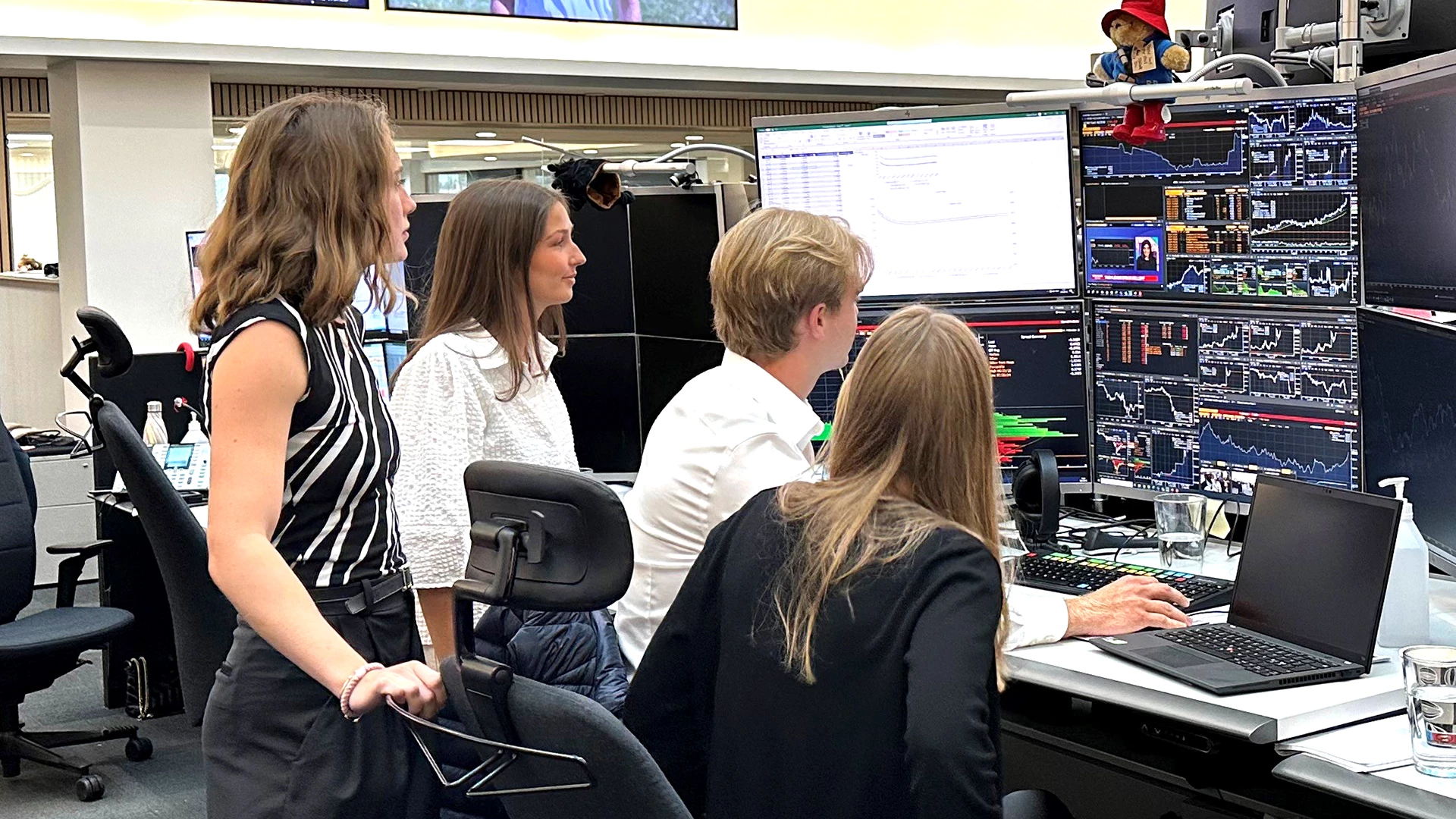
Interns often monitor real-time dashboards to ensure models behave correctly during volatility spikes.
You’re not just backtesting — you’re sanity-checking market reactions as they happen.
2. Failure Pattern Detection
CTC asks interns to explain not just why strategies work, but why they fail under certain microstructure conditions.
This is uncommon in other firms, where failure analysis is usually done by senior researchers.
3. Trade Lifecycle Sensitivity Mapping
Interns may model how a trade evolves from signal → decision → execution → P&L, catching hidden slippage or latency drag.
Skills Candidates Don’t Realize They Need
Beyond the usual Python and statistics, CTC quietly values:
-
Rhythm awareness: spotting repeating patterns in market microbehavior
-
Context-based coding: writing models that mimic trader intuition
-
Noise filtering: knowing what data NOT to use
-
Mental clarity under time pressure: especially during intraday simulations
These are soft-quant skills that aren’t found in textbooks — but make or break performance.
Why CTC Is Different From Other Quant Trading Internships
Culture and Work Style

CTC operates with a flat, extremely collaborative culture. Instead of hierarchy, interns work directly with lead researchers. Meetings often happen around whiteboards filled with probability trees, microstructure diagrams, or trading strategy sketches.
Unlike big-name firms, CTC avoids bureaucracy. If your signal performs well, it might get deployed within days — not months.
Tech Stack and Problem-Solving Approach
CTC leans on:
-
Python + R for research
-
C++ for latency-sensitive modules
-
Docker for environment consistency
-
Cloud compute clusters for heavy simulations
-
Proprietary microstructure databases rarely mentioned online
-
Event replay engines to test strategy reactions to historical anomalies
Their emphasis on repeatable, clean experimental setups distinguishes them from competitors where interns often hack together quick tests.
Rare Perks and Growth Opportunities
-
You present strategy reviews directly to PMs
-
You rotate across research pods
-
You’re taught how to think like a trader, not just a coder
-
Intern projects often become full-time research tracks
Deep Dive Into Real-World Tasks
Most online descriptions of quant internships talk about “backtesting” and “data analysis” — but let’s go deeper into the real, specific tasks a ctc quant trading intern handles.
Signal Development
You’ll test:
-
microtrend reversals
-
volatility collapses after large prints
-
liquidity-driven spreads
-
calendar-time vs. event-time inefficiencies
CTC expects interns to propose signals independently, not just test assigned ones.
Microstructure Research
This includes:
-
analyzing queue position decay
-
measuring hidden liquidity impact
-
mapping spread transitions around auctions
-
identifying spoofing-lookalike behavior patterns
These topics rarely appear in internship guides, but they’re core to CTC’s competitive edge.
Building Python/R Models
ctc quant trading intern, Your models may include:
-
non-linear regression on order flow
-
event-sequenced bar generation
-
multi-layer signal stacking
-
latency-adjusted returns
These scripts feed into larger strategy engines.
A/B Testing Strategies
ctc quant trading intern, Interns compare:
-
different execution engines
-
model versions with varying thresholds
-
risk filters vs. no risk filters
-
adjusted cost models
This resembles tech-style experimentation — rare in traditional quant internships.
Risk Validation and Scenario Modeling
You might simulate:
-
overnight gap scenarios
-
fat-finger outliers
-
clustered volatility
-
liquidity droughts
Tools No One Else Mentions
CTC interns often use:
-
Ray for parallelized research
-
DuckDB for lightning-fast local analytics
-
HDF5 archives for time-aligned tick data
-
Cloud GPUs for feature-rich simulations
-
Webhook alert systems for anomaly monitoring
These tools elevate research rigor far beyond typical student-level projects.
Skills CTC Actually Looks For (Uncovered Insights)
1. Mental-Math Speed Drills
You’ll sometimes need to estimate edge on the fly:
multiplying probabilities, adjusting Sharpe estimates, or approximating slippage.
2. Live Trading Simulation Skills
ctc quant trading intern go through internal simulations where they:
-
respond to fast-changing price data
-
adjust entries/exits
-
handle unexpected volatility
It tests instinct as well as logic.
3. Data-Cleaning Precision
ctc quant trading intern, CTC cares more about removing noise than adding features.
Bad cleaning destroys edge faster than bad modeling.
4. Curiosity-Driven Backtesting
They want candidates who ask:
“But what if the market behaves differently on quad witching days?”
5. Turning Intuition Into Statistical Edge
This means translating a gut feeling (e.g., “price flickers before breakouts”) into measurable hypotheses.
How to Prepare for CTC Quant Trading Intern Interviews?
Step-by-Step Humanized Guide
Step 1 — Know the Market, Not Just the Math
Read live market behavior each morning for 10 minutes. Notice how spreads widen at lunch. Observe opening volatility.
Step 2 — Build Your Quick-Math Reflexes

Practice:
-
expected value approximations
-
ratio simplifications
-
variance estimations on scratch paper
Step 3 — Prepare for Unknown Interview Elements
Reaction-Time Tests
You may receive quick-fire decision prompts to measure cognitive flexibility.
Pattern-Recognition Tasks
Tasks like identifying shape patterns in noisy charts.
Probability Rapid-Fire
Examples:
Q: If a signal has a 58% win rate and 0.9 Sharpe, what happens if volatility doubles?
A: Expected Sharpe drops; relative edge shrinks due to non-linear drawdowns.
Sample Interview Questions & Answers
Q: “How would you detect a microstructure edge in high-noise data?”
A: “I’d isolate event-time slices, reduce tick irregularity using interpolation, apply noise-robust metrics like VWAP deviation curves, then pressure-test across volatility clusters.”
Q: “Explain a failed project you learned from.”
A: “I built a promising signal that collapsed during fast markets — I learned to incorporate regime filters before trusting preliminary backtests.”
A Complete Roadmap to Get Selected
30-Day Preparation Plan
Week 1:
Master statistical tools, review probability, refresh Python.
Week 2:
Build two micro-signals and backtest them.
Week 3:
Start timed quant puzzles, live market observation, and edge estimation practice.
Week 4:
Run mock interviews and refine your application.
Portfolio + GitHub Ideas
-
Order-book feature extraction engine
-
Adaptive bid/ask imbalance model
-
Micro-event classifier using simple ML
-
Latency-aware backtesting engine
-
Repo showcasing alternative dataset exploration
How to Craft an Application Specifically for CTC?
-
Highlight curiosity > credentials
-
Show 1–2 meaningful research experiments
-
Emphasize your process, not just results
-
Include a short “trader mindset” narrative to stand out
Salary, Work Hours, and Realistic Expectations
ctc quant trading intern salaries vary by location, but commonly range highly competitively with top quant firms.
Work hours are:
-
intense during strategy deadlines
-
flexible during independent research
-
reasonable compared to banking
Expect deep thinking, quick feedback cycles, and fast learning.
Expect to feel overwhelmed in week one — and deeply confident by week eight.
Lifestyle tip:
Sleep matters more than caffeine. Your brain is your main trading engine.
Future Career Path
After the ctc quant trading intern program, most successful interns transition into:
-
Quant researcher roles
-
Trader training programs
-
Algo strategy developers
-
Data scientists specializing in financial modeling
Some even launch funds or join high-frequency shops after a few years.
The internship opens doors because it trains both the scientific and instinctive sides of a quant — a rare combination.
Conclusion
The journey to becoming a ctc quant trading intern is demanding, but deeply rewarding. It’s a role where your curiosity becomes your superpower, your code becomes your compass, and your ideas can influence real market decisions. If you have the hunger to explore the unknown parts of market behavior, this internship is more than a stepping stone it’s a launchpad.
FAQs
1. What does a ctc quant trading intern actually work on daily?
Daily tasks include signal testing, microstructure research, Python modeling, and monitoring live trading conditions — much deeper than standard intern roles.
2. How hard is it to become a ctc quant trading intern?
It’s competitive, but achievable with strong coding, probability skills, and curiosity-driven research experience.
3. What makes CTC different from other quant internship programs?
CTC gives interns real ownership, access to proprietary datasets, and exposure to live strategy discussions.
4. Do interns at CTC work on real trading strategies?
Yes — interns contribute to experiments and model versions that often influence production decisions.
5. What skills help applicants stand out?
Mental-math speed, thoughtful data-cleaning techniques, hypothesis formulation, and live-market observation.
6. Are interviews purely technical?
No — they include reaction tests, pattern recognition challenges, and reasoning under pressure.
7. How should I prepare my GitHub for a CTC application?
Showcase projects that explore market behavior, microstructure patterns, or custom backtesting frameworks.